
Searching Pulaski County Criminal Dockets
Start any Pulaski County criminal docket lookup at Missouri Case.net. It is the state's free public window. An exact case number is the best key. When no case number is handy, search by litigant name and narrow the results by county, court, and filing date. Before trusting a match, compare the case style, division, case type, and filing date. A shared name proves nothing on its own.
A result can show the case header, docket entries in date order, and a future setting when public access permits. The Missouri public tracking instructions explain how to move from a search hit to the case header and full docket. Keep the case number handy. Note the latest entry too. Save any scheduled event. Those details give the Pulaski County Circuit Clerk a focused starting point when the public result leaves a key question open.
- Choose Case Number Search in Case.net and enter the number exactly as it appears on a court notice. If no number is available, use Litigant Name Search with a careful spelling.
- Narrow the result to Pulaski County and confirm the court, division, case type, filing date, and public case style.
- Open the Case Header first, then read the docket in order and note the latest filing, order, and future setting.
- Open a linked entry only when it is available to the public viewer. An unlinked entry may be text-only, paper, unavailable, or restricted.
- Call the clerk for a copy route or courthouse-terminal access when the record cannot be viewed remotely.
Note: Save the exact search terms and the date you used. A new filing, a corrected spelling, or an access restriction can change what the public result shows later.
Pulaski Criminal Case Search Routes
Pulaski County criminal cases are heard in the Twenty-Fifth Judicial Circuit, split between circuit and associate divisions under Missouri law and local assignment. The Pulaski County Circuit Clerk holds the files. Rachelle Beasley runs that office. You will find it at 301 Historic Route 66 East, Waynesville, Missouri 65583. The listed phone is (573) 774-4755. Criminal files, traffic files, and other court work all pass through this office.
Case.net is a search tool, not the custodian of the file. Some records will not open from home. A courthouse public terminal may be the right route when a Pulaski County electronic case record is not available remotely. A phone call, a counter visit, or a copy request also works for a docket sheet, a public order, a transcript, or a recording. Ask for the division and the record type. Do not ask the clerk to interpret an entry's legal meaning.
Pulaski County Circuit Clerk
301 Historic Route 66 East
Waynesville, MO 65583
(573) 774-4755
Criminal appeals from this state trial court usually head to the Missouri Court of Appeals, Southern District. That is the intermediate stop. The Twenty-Fifth Judicial Circuit local rules give the local circuit reference. Federal cases are different. They run through PACER and the Western District of Missouri, Southern Division, never the Pulaski state-court docket.
Inside a Pulaski County Criminal Docket
Think of a Pulaski County criminal docket as the court's timeline. Every filing and event lands in order. The entries can cover a charging document, process, counsel, motions, settings, rulings, a plea, judgment, sentence, payments, probation-related events, or an appeal. It is not a word-for-word hearing transcript. Careful reading matters. A filed information means a charge exists, not that anyone was convicted. A motion is a request, not a ruling. A future setting is a scheduled hearing, not one that already happened.
Missouri allows paper, microfilm, and electronic records. An ECASE tag in the public viewer marks an electronic case record. A linked docket entry may open a document if the viewer can display it. Read the header and the newest entries together. A disposition or judgment label can need the linked order to show its scope, counts, conditions, or finality.
| Case number | The court identifier. 25PU-CR00000 is an illustrative format only, not a real case. |
|---|---|
| Charge or filing | A complaint, information, indictment, citation, or motion. A charge remains an allegation until resolved. |
| Division | The circuit or associate assignment that helps identify the correct Pulaski court path and setting. |
| Hearing setting | A future arraignment, pretrial, plea, trial, sentencing, or review event, subject to later change. |
| Disposition or judgment | The recorded outcome or court action. Read the order or judgment for the terms that the short label may omit. |
Pulaski Criminal Docket Document Gaps
Public search and document access differ. Missouri's file-viewer explanation warns that a public case can still include confidential attachments. A missing link can mean several things. The entry may be text-only or on paper, or the attachment may be unavailable to the public viewer. Read it correctly. The right conclusion is that the document is not available through that view, not that it was never filed.
When a criminal document will not open, keep the case number and the entry date handy. Then contact the clerk's office. Staff can say whether a public version can be inspected at the Waynesville facility. Copies may be available on request. The official e-filing material directs some non-attorney public users to a courthouse terminal for eCASE documents. A request can cover a public docket sheet, a filed public order, or a plain or certified copy, but not legal advice.
The Western District of Missouri contact page lists clerk and CM/ECF help contacts for the federal Southern Division. Those are federal contacts only. Mixing them into a state request wastes everyone's time. A Pulaski state criminal case stays put. It runs through Missouri Case.net and the local circuit clerk unless the matter lands in federal court.
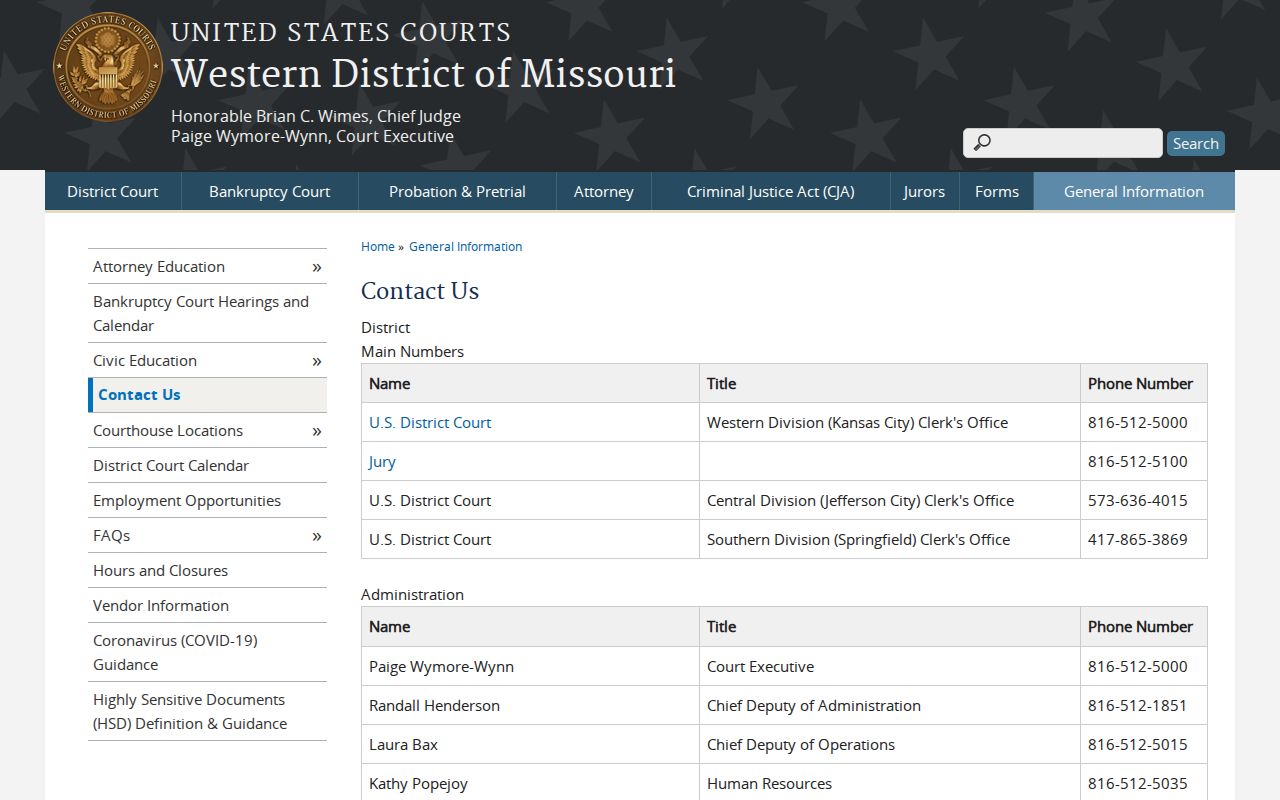
Confirm the court system before chasing any criminal docket or document request. State and federal are separate worlds. A quick check saves a wasted call.
Note: A Pulaski criminal document that will not open may reflect access limits or record format, not an absence of the filing itself.
How a Criminal Case Moves
Docket entries in a Pulaski County criminal case tell a story. It tends to come in a set order. First comes the charging paper. That may be a complaint, an information, or an indictment. Then comes process service and an initial appearance or arraignment. From there the docket can pick up speed. Expect entries on counsel, bond, and discovery. Motions, pretrial conferences, and trial or plea settings follow along the way. A plea, verdict, dismissal, or other disposition usually opens the last chapter. After that, sentencing, probation, restitution, payment, appeal, or post-judgment activity may follow. Not every case runs this course, though. A criminal docket can skip steps, combine them, or end early.
Docket flow: Filing → Arraignment → Pretrial → Plea or Trial → Disposition → Sentencing
Labels can mislead. An arraignment is a formal early criminal proceeding, not a trial. A plea entry is not a judgment either. A sentencing date on the calendar is just a date until the court actually sentences. "Nolle prosequi" means the prosecutor chose not to move forward on a charge. That is not an acquittal. Do not draw any conclusion from a short docket label. Read the later order or judgment first.
Pulaski Criminal Docket Terms
Courts use short labels to save space. The trouble is that those labels can hide real distinctions. The glossary here translates common docket functions into plain language. Check the complete docket, plus any accessible order. Then weigh a notice or a clerk response.
- Arraignment
- An early criminal appearance tied to plea, counsel, bond, or related process. It is not a trial.
- Continued
- A setting or matter moved to a later date. The label alone does not say why or who requested it.
- Disposition
- The recorded result or status of a case or charge. Different counts can have different dispositions.
- Judgment
- A court decision that may resolve rights, sentence, or another issue. The filed judgment gives the controlling terms.
- Warrant
- Judicial process that requires current confirmation from an authorized court or law-enforcement contact.
Note: A closed or disposed case is not automatically sealed, expunged, paid in full, or favorable to either side.
Courts That Hold Criminal Dockets
Missouri's circuit court serves as the general-jurisdiction trial court for Pulaski County. Within the Twenty-Fifth Judicial Circuit, criminal work lands somewhere specific. It may go to a circuit division or an associate division. The division printed in the case header beats any guess based on the charge. Municipal traffic and ordinance cases sit in their own category. That holds even when they produce a state-court number.
The Pulaski County Circuit Clerk holds the local court docket. The filed records behind it sit there too. City routing matters too. Dixon's official court notice reports that its municipal court closed in 2023. Official material also identifies a 2024 St. Robert election. It sent ordinance violations to the Pulaski County Associate Circuit Judge in Waynesville. So check the division in the case result or with the clerk. Routing a criminal docket by city name alone can send you to the wrong desk.
The official Western District U.S. Attorney contact page lists federal points of contact. It is a separate federal reference, not a Pulaski Circuit Clerk record source.
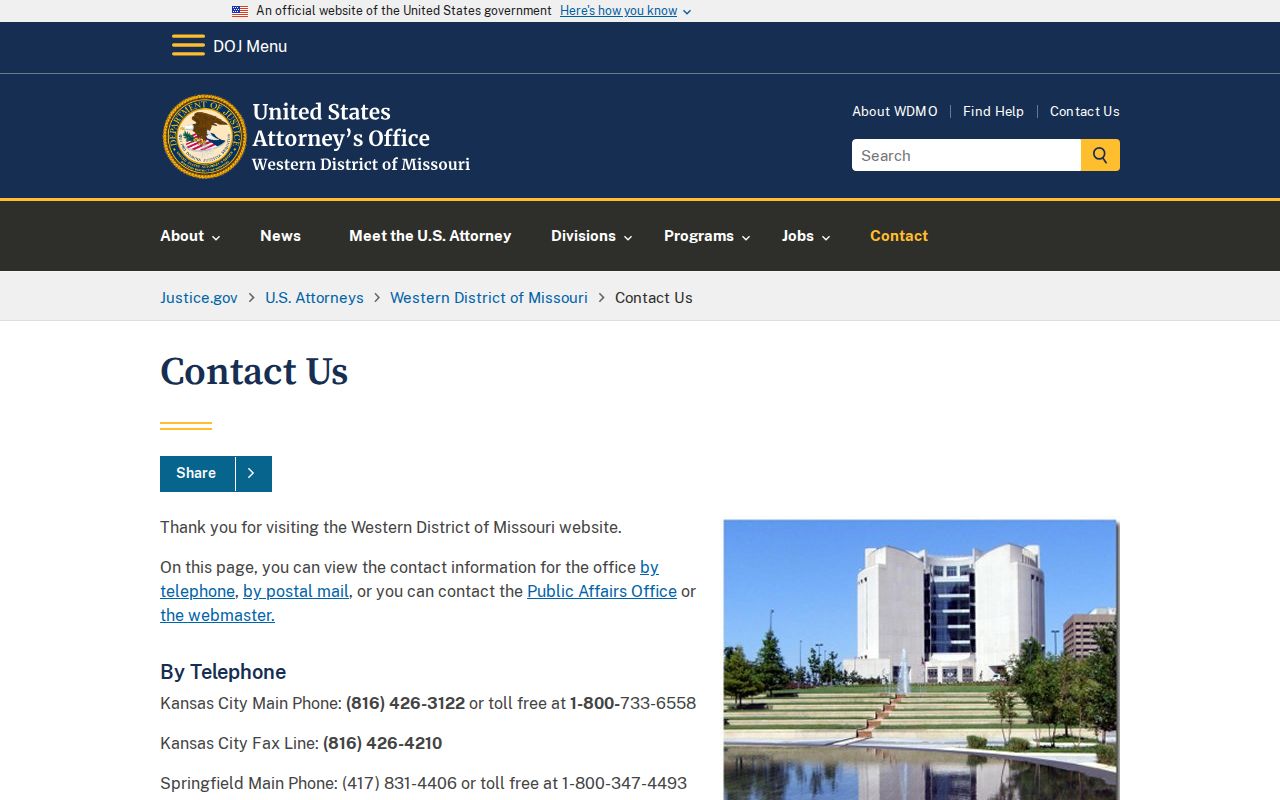
That federal contact material helps you separate a federal criminal matter from a Pulaski County state criminal docket.
Pulaski Criminal Warrant Entries
A warrant-related entry on a Pulaski County docket is not live warrant confirmation. Online status can shift after any search. Bond terms or conditions may sit in a later entry or a separate order. The clerk can explain what the Pulaski criminal docket displays. But confirming whether a warrant is active right now may take an authorized court or law-enforcement contact.
One more caution. The clerk page's statement that the office is on call for warrants, search warrants, and orders-of-protection filings describes urgent filing operations. It is not a public after-hours records desk. Never use a public docket entry to decide whether a person should appear, whether an arrest may occur, or what a bond condition means. And never treat one as current warrant status. Get current confirmation through the official channel that carries that duty.
Note: Treat a Pulaski warrant entry as historical docket text. An authorized official must confirm its current status.
Sealed Dockets and Public Access
Access to Missouri court records turns on a mix of court rules and statutes. Case-specific orders and local practice also play a part. The Missouri Sunshine Law, Chapter 610, covers judicial administrative records. It does not promise that every document in a court case file is open. For an adjudicative criminal file, start with the circuit clerk. The applicable court rules govern what opens. If a remote result looks incomplete, ask whether a public, redacted, or facility-only version exists.
Juvenile records and social records stay closed under Missouri law, generally speaking. Confidential attachments can also hide inside an otherwise public case. Sealing and expungement are different things. Sealing restricts access under an order or rule. Expungement limits public availability under statute. One blank or partial search result proves neither.
Access limits: Court Operating Rule 4 identifies confidential, sealed, and expunged record treatment. Section 211.321 generally restricts juvenile and social records. Chapter 610 addresses Missouri public-record access but does not override court-file restrictions.
The juvenile confidentiality statute is the source for the restriction described here.
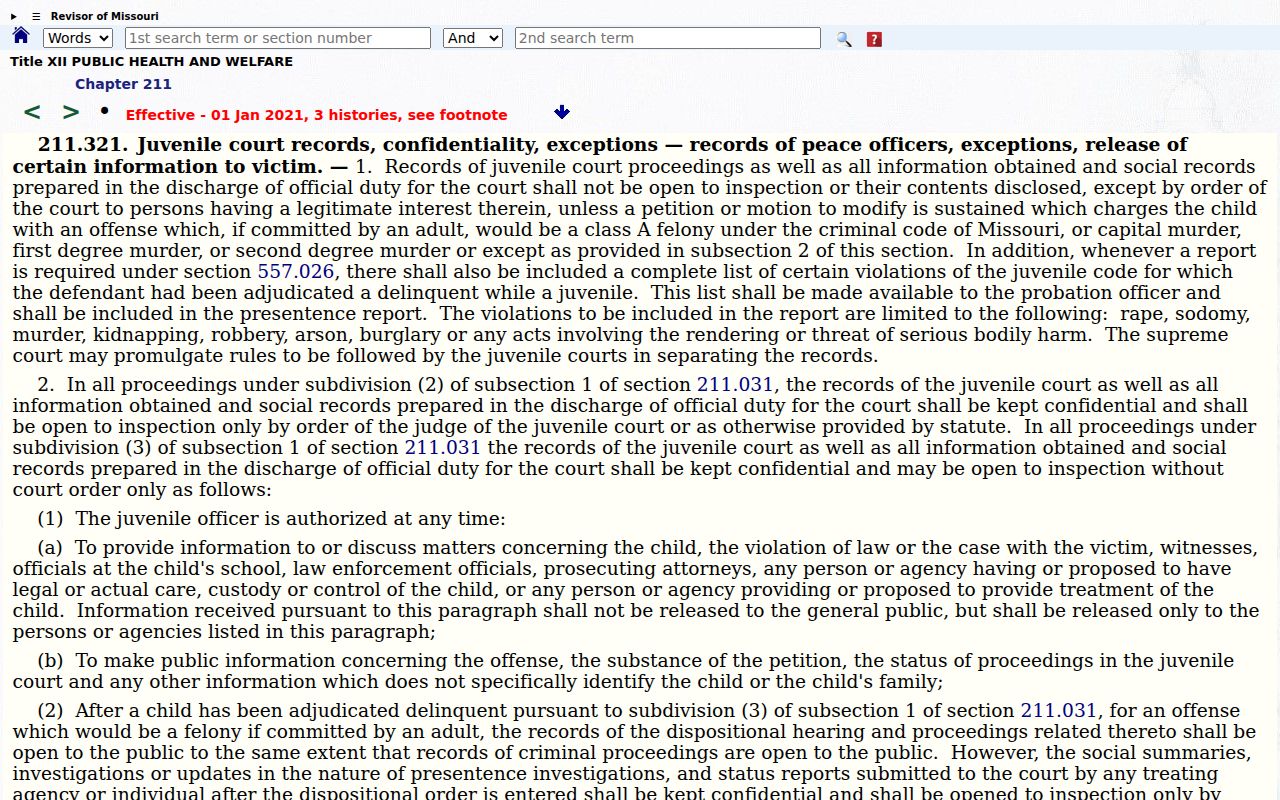
Juvenile records stay closed under the law that seals them, which is why an adult criminal docket search will not surface them the same way.
Pulaski Criminal Expungement Limits
Missouri Section 610.140 sets up an expungement petition filed in the court where the person was charged or convicted. The statute walks through eligibility, the agencies holding related records, notice, objection, hearing, and confidentiality. It also sketches timing and other conditions. But eligibility is fact-specific. The statute carries offense, record, and lifetime limits. A docket result alone can never promise that a case qualifies.
The numbers matter here. The prosecutor gets 30 days to object, and a hearing must occur within 60 days after an objection. The petition carries a $250 surcharge under Section 488.650. Ask the clerk about filing procedure and current local requirements. Do not assume a standard public criminal search will show an expunged record.
Section 610.140 itself is the authority on the petition, notice, hearing, and confidentiality process. Its limits apply statewide.
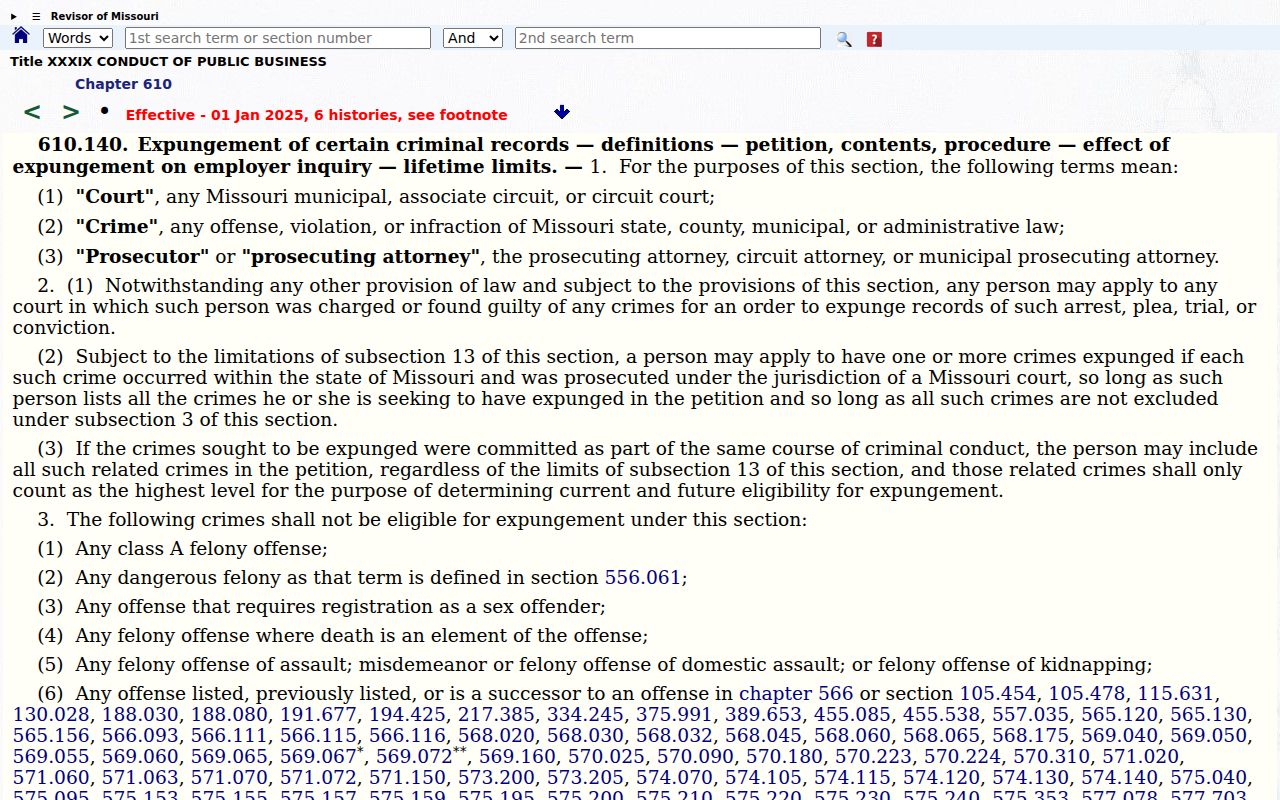
The statutory image supports the distinction between a criminal docket’s public history and an expungement process that can restrict later access.
Section 488.650 is the official source for the listed expungement-petition surcharge.
The surcharge tied to the expungement petition process is separate from any fee for a Pulaski criminal docket search or a copy request. It applies only when a person files a petition. For anything beyond a docket entry, confirm the details first. Use the Pulaski County case lookup to check the case number and court. Then call the clerk.